For most people, generative AI still means text: questions, answers, summaries, emails. But models are learning to handle images, video, audio and sensor data — and, together with synthetic data in manufacturing, that shift is what carries the technology out of the office and onto production lines, warehouses and field operations.
From the screen to the physical world
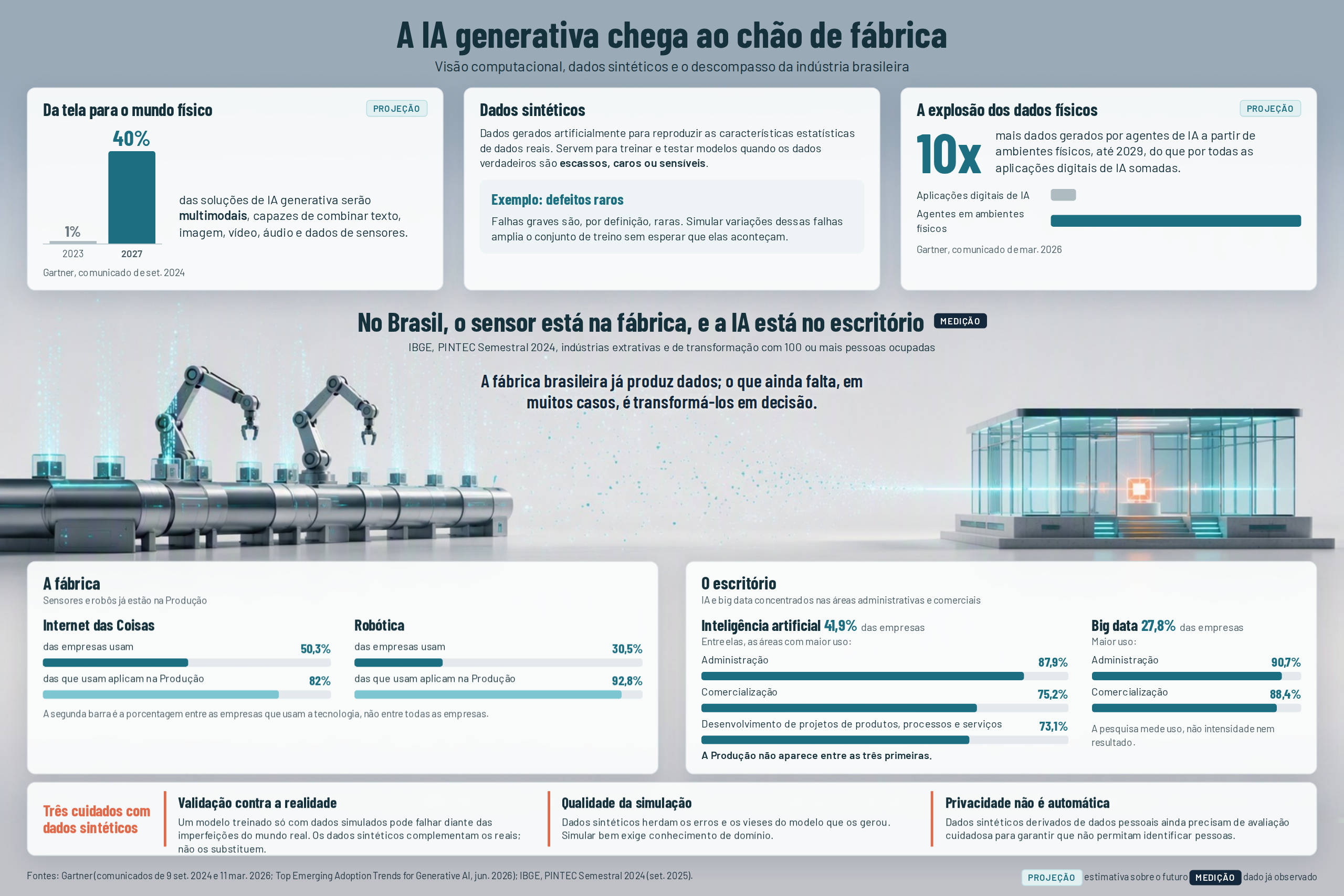
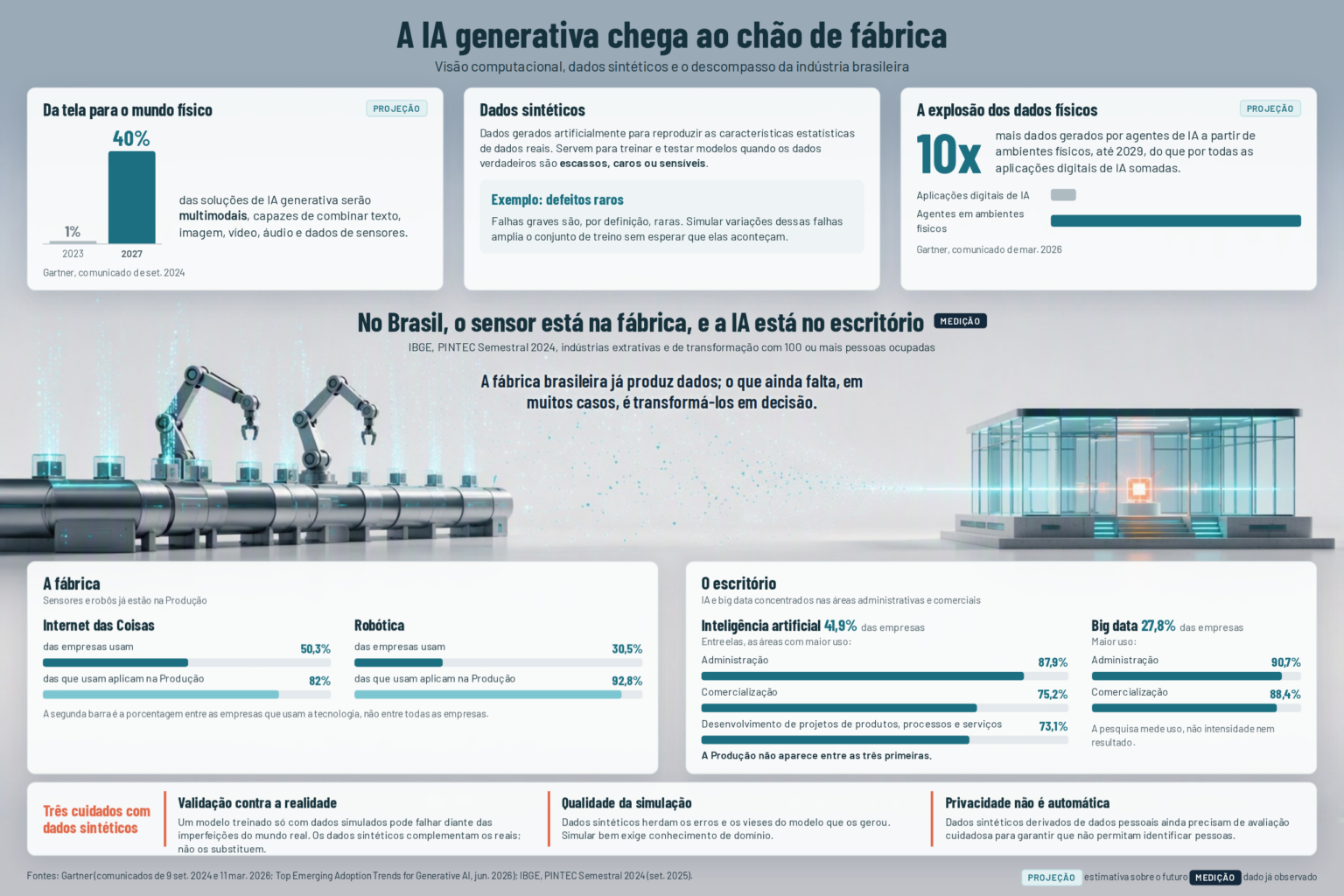
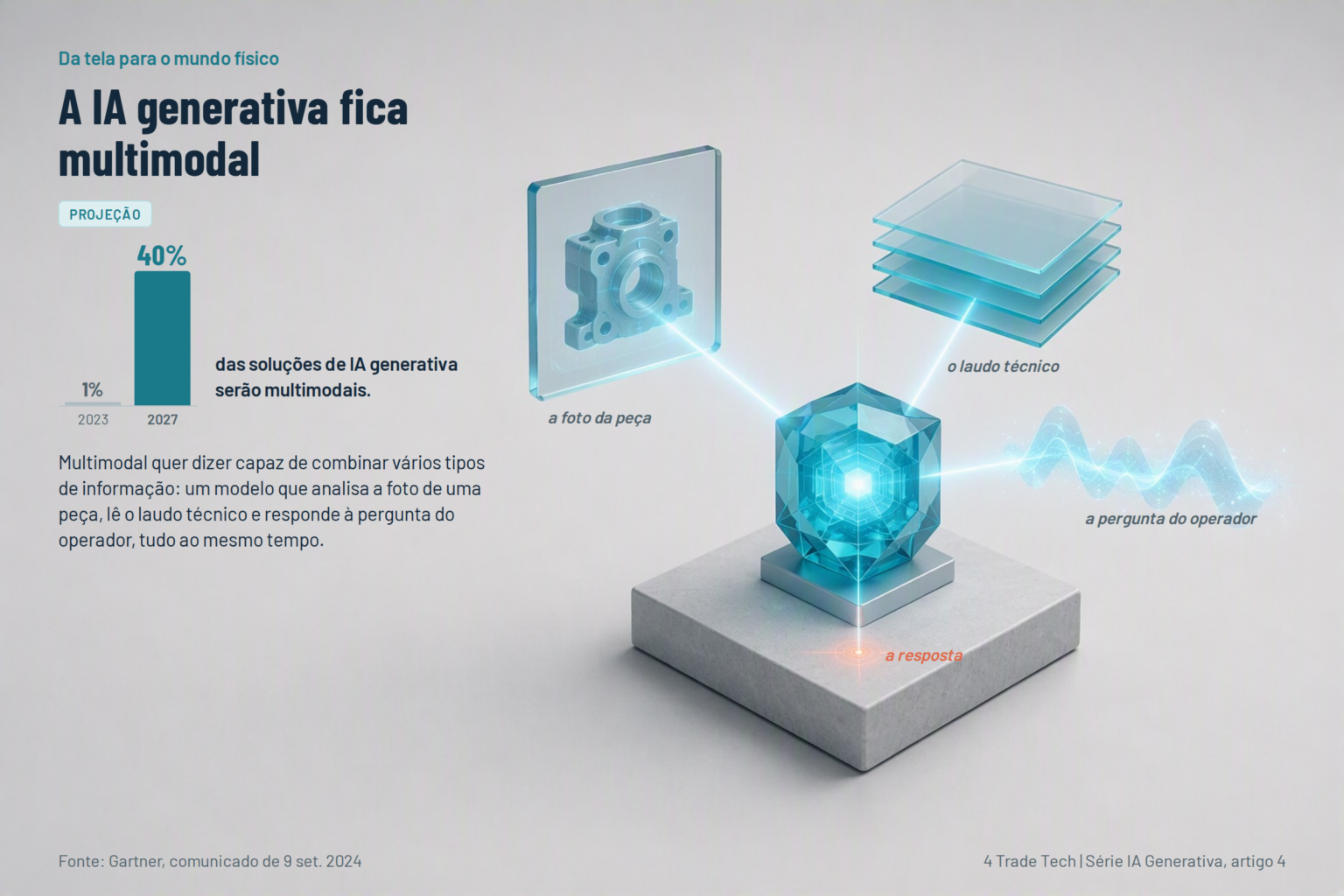
Gartner projects that 40% of generative AI solutions will be multimodal by 2027, against just 1% in 2023. Multimodal means able to combine several types of information: a model that analyses a photo of a part, reads the technical report and answers the operator’s question, all at once.
In its June 2026 piece on adoption trends, the firm goes further. By making computer vision solutions possible, generative AI is driving advances in data, image and video analysis, which Gartner describes as the next wave of innovation. Manufacturing and retail are among the sectors already using these capabilities.
Simulation and synthetic data in manufacturing
The second vector is less visible but may matter just as much. Synthetic data is artificially generated data that reproduces the statistical characteristics of real data. It is used to train and test models when true data is scarce, expensive or sensitive.
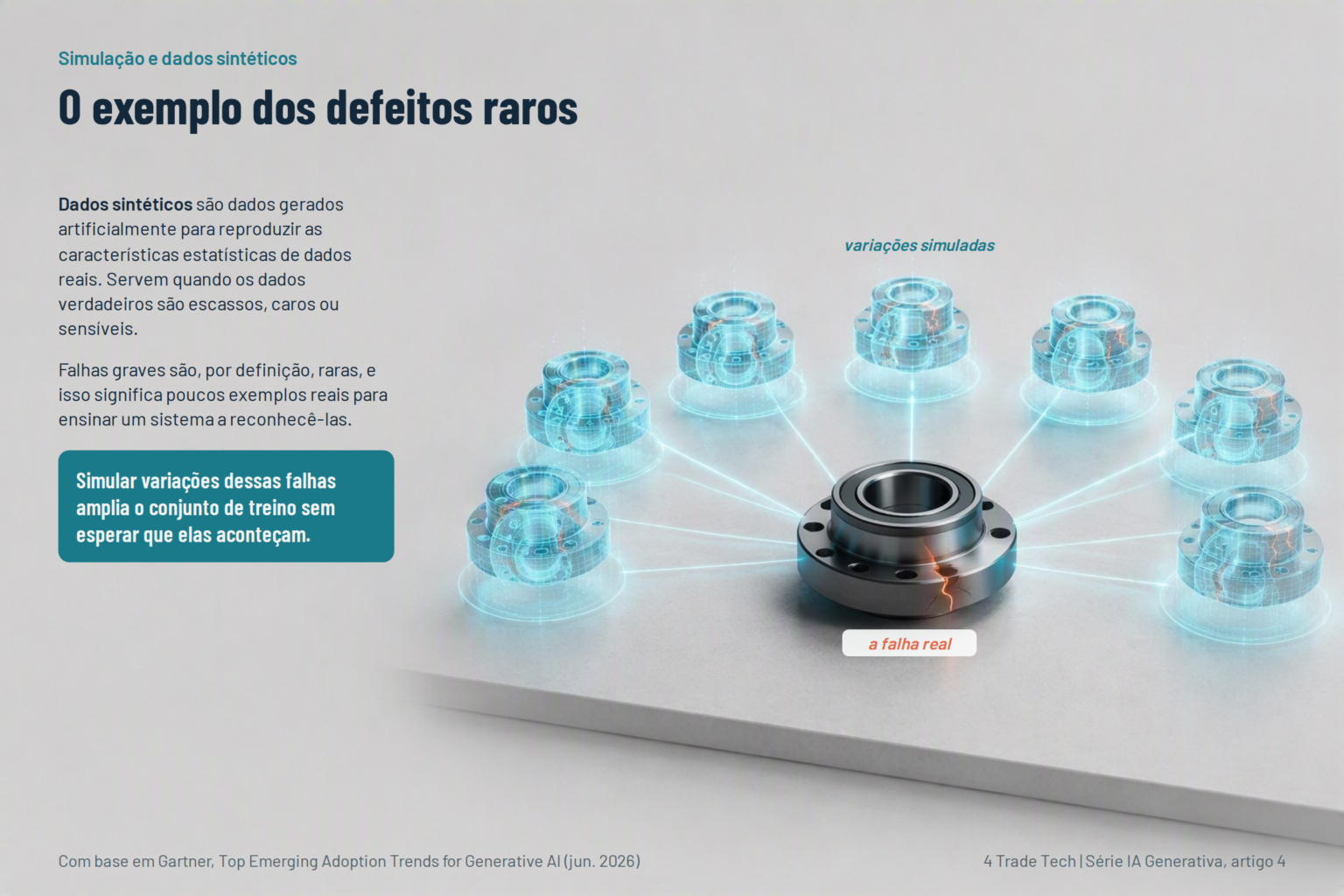
A typical example is defect detection. Serious failures are, by definition, rare, which means few real examples to teach a system to recognise them. Simulating variations of those failures expands the training set without waiting for them to occur — the most direct use case for synthetic data in manufacturing.
According to Gartner, AI simulation opens space to explore scenarios, generate synthetic data, conduct market research and improve forecasts. The firm notes these capabilities are particularly valuable in regulated sectors and in manufacturing, where privacy, efficiency and cost are critical. Embedded in products, they allow creating, testing and optimising scenarios that were previously impossible or too expensive.
The volume of physical data should grow sharply. In its March 2026 predictions, Gartner estimated that by 2029 AI agents will generate ten times more data from physical environments than all digital AI applications combined. That data, the firm says, lets so-called world models learn patterns and produce more accurate forecasts and simulations.
In Brazil, the sensor is on the shop floor and AI is in the back office
IBGE’s half-yearly PINTEC survey, covering extractive and manufacturing industries with 100 or more employees, shows a revealing contrast for 2024:
- Internet of Things: used by 50.3% of companies. Among them, 82% apply it in Production.
- Robotics: used by 30.5% of companies. Among them, 92.8% apply it in Production.
- Artificial intelligence: used by 41.9% of companies. Among them, the areas of heaviest use are Administration (87.9%), Sales (75.2%) and Product and process development (73.1%). Production does not appear in the top three.
- Big data analytics: used by 27.8% of companies, concentrated in Administration (90.7%) and Sales (88.4%).
The reading is that the infrastructure generating physical data — sensors and robots — is already installed on the shop floor of much of medium and large industry. Artificial intelligence and large-scale data analysis, meanwhile, remain concentrated in administrative and commercial functions. In other words, the Brazilian factory already produces data; what is often missing is turning it into decisions.
It is in that gap that synthetic data in manufacturing finds its most practical application: helping extract decisions from a pile of signals that today merely accumulates.
One caveat: the survey measures use, not intensity or results. It does not say how much sensor data is actually analysed, only where each technology is present.
Where the opportunity lies
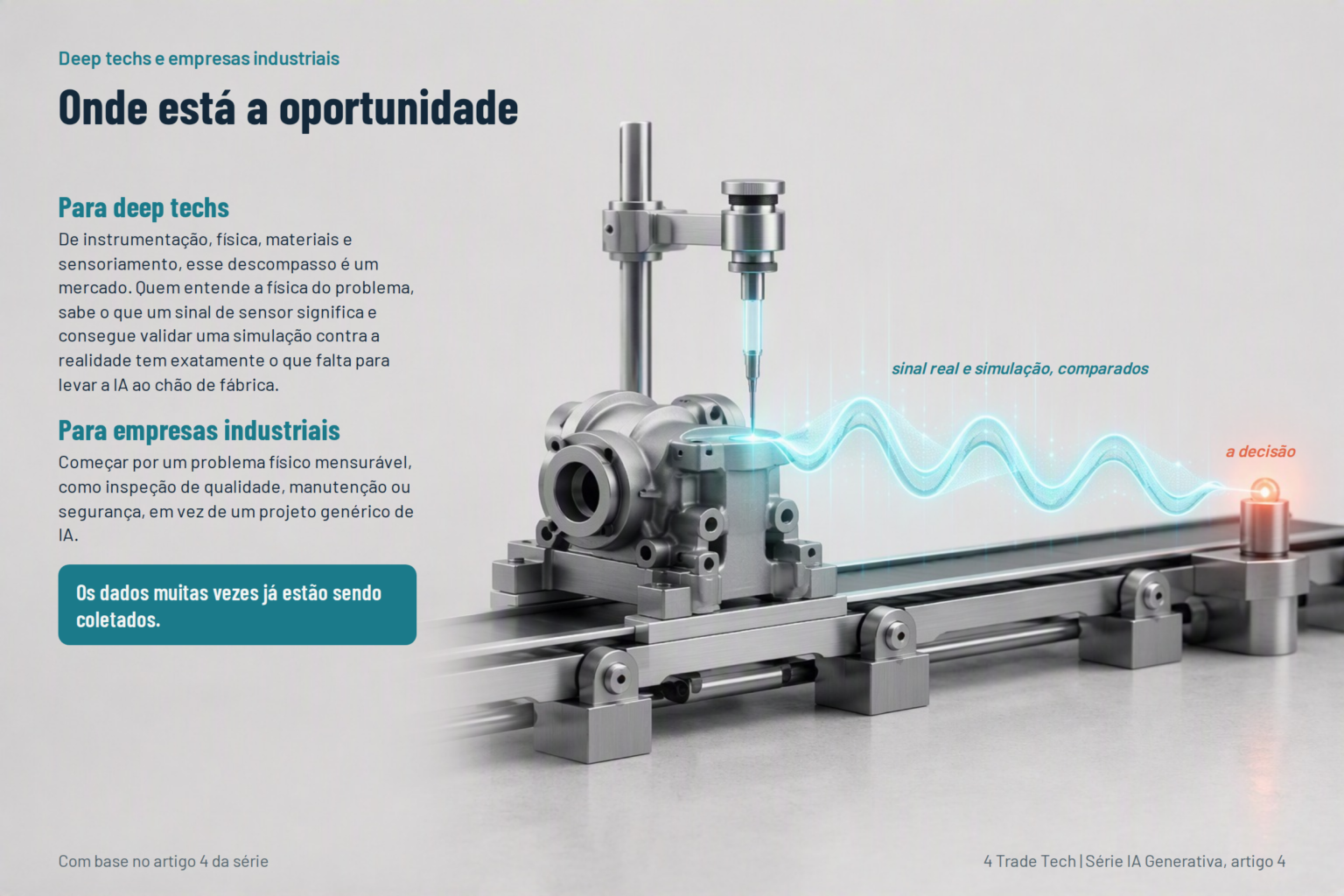
For deep techs in fields such as instrumentation, physics, materials and sensing, this mismatch is a market. Those who understand the physics of the problem, know what a sensor signal means and can validate a simulation against reality have exactly what is needed to bring AI — and synthetic data in manufacturing — to the shop floor.
For industrial companies, the safest route is to start with a measurable physical problem, such as quality inspection, maintenance or safety, rather than a generic AI project. The data is often already being collected.
Three cautions with synthetic data in manufacturing
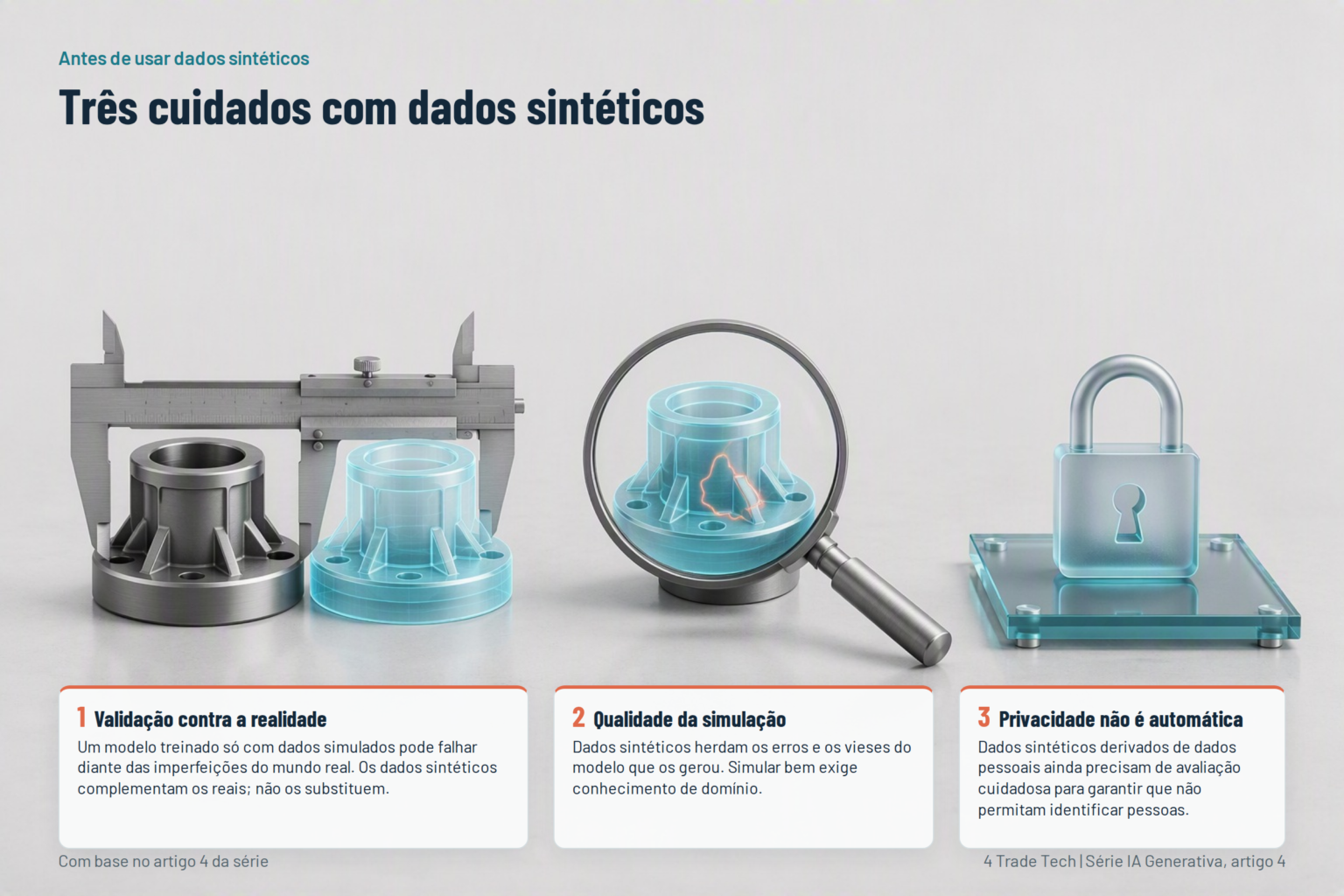
- Validation against reality. A model trained only on simulated data may fail against the imperfections of the real world. Synthetic data complements real data; it does not replace it.
- Simulation quality. Synthetic data inherits the errors and biases of the model that generated it. Simulating well requires domain knowledge.
- Privacy is not automatic. Synthetic data derived from personal data still needs careful assessment to ensure it cannot identify individuals.
This is the fourth article in the series. In the previous one, we covered agentic AI and agent washing. Next, the series looks at an effect already visible in the measurements: companies choosing to build their own software with AI instead of buying it.
4 Trade Tech exists to turn science into business decisions.
Does your plant already collect sensor data nobody analyses, or does your deep tech master the physics of an industrial problem? 4TT can help pick the first measurable use case and connect those who hold the data with those who can read it.
[email protected] · +55 (11) 93244-4141 · linkedin.com/company/4tradetech
Sources
- Gartner · Gartner Predicts 40% of Generative AI Solutions Will Be Multimodal By 2027 · press release, 9 Sep. 2024.
- Gartner · Top Emerging Adoption Trends for Generative AI, by Vibha Chitkara · 22 Jun. 2026.
- Gartner · Gartner Announces Top Predictions for Data and Analytics in 2026 · press release, 11 Mar. 2026.
- IBGE · Share of industrial companies using artificial intelligence rose from 16.9% to 41.9% between 2022 and 2024 · PINTEC Semestral, IBGE News Agency, 24 Sep. 2025.